
Opinion | Sports Rap Network
HBCU Football Is Still America’s Real Training Ground—And That’s Why the Mainstream Ignores It
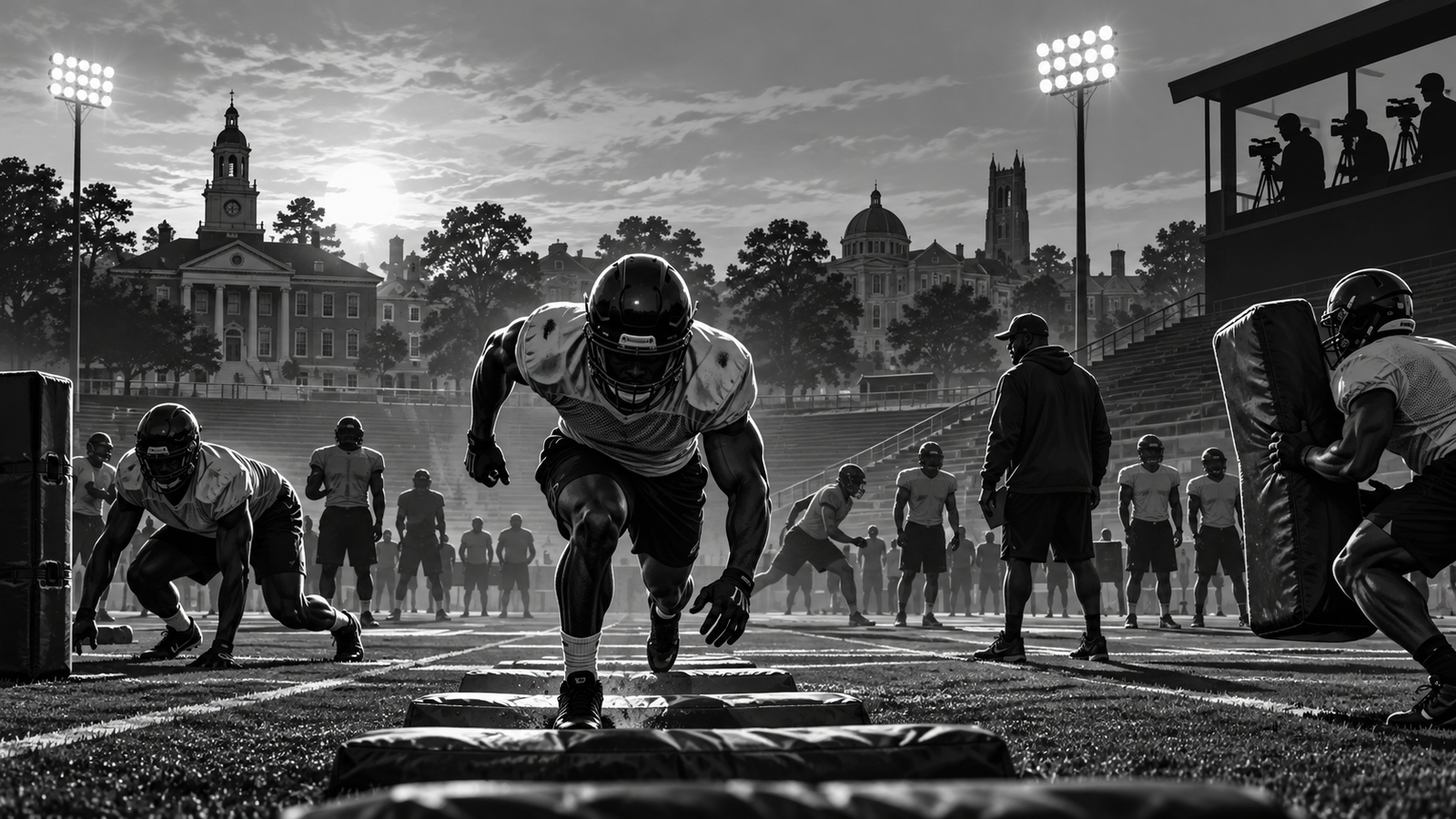
Image credit: Sports Rap Network / AI-assisted editorial illustration
HBCU football isn’t just a sports story; it’s an American institution doing the work the mainstream pretends not to see. When the spotlight stays away, it exposes who truly controls the narrative.
I’m going to say it plain: the way America talks about football culture still shows a pattern—HBCUs are treated like a side quest instead of part of the main storyline. And that’s not an accident. It’s a structural habit, the kind you can trace back through American history when Black institutions were forced to fight for oxygen while the country claimed it was “colorblind” later on.
Historically, HBCUs weren’t created as a hobby. They were built because the nation refused to open doors. In the early chapters of American education, Black students were blocked from mainstream systems, and HBCUs became the alternative infrastructure—schools, communities, and leadership pipelines. Football followed that same logic. It wasn’t just entertainment. It was training, discipline, identity, and proof of excellence under pressure.
Now look at the modern landscape. HBCU athletics operate with a different kind of grind. You’ll hear people talk about “exposure” like it’s something you can simply earn by winning enough games. But exposure is controlled by attention—who gets invited, who gets filmed, who gets discussed, and who gets treated like their success is “surprising” instead of inevitable. If you’re always being treated like a novelty, you’re not being evaluated fairly. You’re being managed.
Here’s my opinion: the mainstream sports machine benefits when HBCU football stays underrated. It keeps the hierarchy intact. It also helps certain gatekeepers avoid accountability. If HBCUs are producing talent, bands, game-day culture, and community leadership—and they’re doing it with less institutional leverage—then the question becomes uncomfortable: Why does the country need a “brand name” to recognize excellence that is already right there?
And that matters because football is not just what happens on Sundays or in the draft spotlight. Football is a pipeline. It shapes careers, but it also shapes communities. When HBCU programs get less mainstream coverage, it doesn’t only affect athletes. It affects local economies, youth participation, and the confidence of young people who are watching and thinking, “Maybe I can be seen.”
I coach youth athletics, so I know how that works. Kids don’t just chase trophies. They chase belief. They want to know adults are paying attention. When the attention is missing, the message lands: you’re not important enough to document. That’s why HBCU sports culture—bands, rivalries, gameday rituals—feels bigger than the field. It’s a counter-narrative. It’s community memory in motion.
There’s also the athlete power angle, and it’s impossible to ignore in the Colin Kaepernick era and beyond. When athletes speak up—about injustice, about respect, about the right to define their own meaning—the mainstream often responds by trying to shrink the conversation. But HBCU culture has always lived with a different kind of clarity. These programs were born out of survival and self-determination. So when people say HBCU football is “just entertainment,” I hear the old disrespect wearing a new outfit.
So why does it matter right now, in this trending-topic moment where everyone wants authenticity? Because authenticity isn’t a marketing slogan. It’s a record of consistency. HBCUs have been consistent for generations: building institutions, developing athletes, and producing culture that doesn’t ask permission. If America truly cared about the sport “growing,” it would treat HBCU football as central, not peripheral.
My demand is simple: stop acting like HBCU football is optional. If the sport is serious about its own legacy, it should document, celebrate, and invest in the places that have carried the weight for decades. The mainstream doesn’t have to agree with every opinion, but it should respect the fundamentals: talent, discipline, history, and the communities that make the game mean something. That’s the real standard. Everything else is noise.
Sources
Substantive update: