
Blog | Sports Rap Network
Clippers Penalty Raises the Cost of Chasing a Championship at Any Price
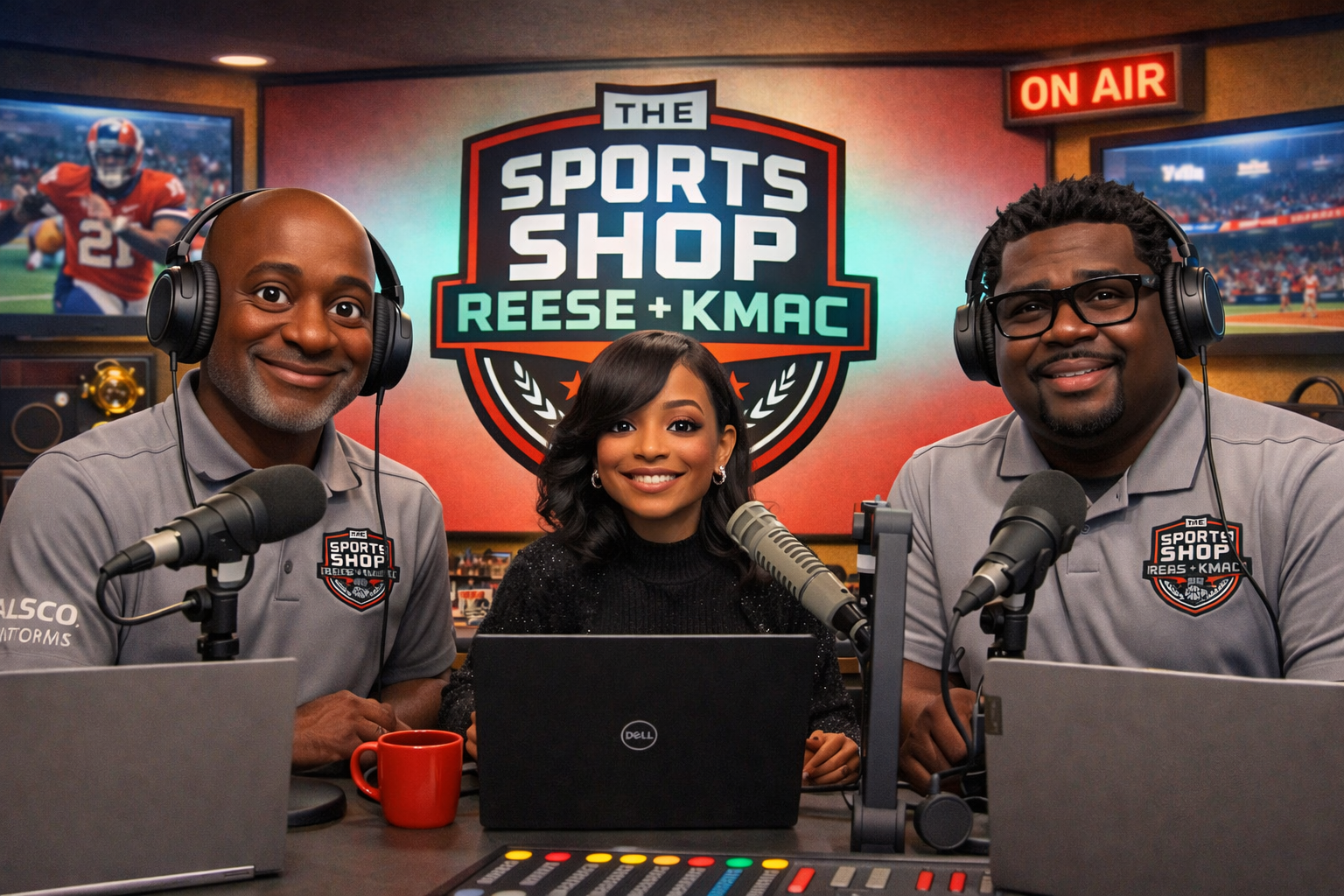
Image credit: Sports Rap Network
Sports Shop hosts saw the NBA's sanctions against the Clippers as a consequential warning: losing five first-round picks may hurt longer than any fine or suspension.
The NBA's reported punishment of the Los Angeles Clippers has put the franchise's long-running pursuit of a title under an even harsher spotlight. Sports Shop hosts focused on the central consequence of the league's findings involving Kawhi Leonard: five forfeited first-round draft picks, a penalty they viewed as more damaging than the financial sanctions handed to owner Steve Ballmer and other executives.
The show also questioned why the league moved so forcefully when hosts believed the investigation did not produce complete, hard evidence of salary-cap circumvention. Still, their discussion landed on a larger point. When a franchise makes aggressive moves to assemble star power, the bill can arrive years later—in lost flexibility, lost young talent and a legacy shaped as much by controversy as competition.
The draft-pick loss is the punishment that lasts
According to the discussion, the Clippers were fined, Ballmer was suspended from association with the team for one year, and front-office leaders Lawrence Frank and Gillian Zucker also received suspensions. Kawhi Leonard was fined $700,000. Those are serious institutional consequences, but the hosts repeatedly returned to the five first-round picks the franchise will forfeit from 2029 through 2033.
For a wealthy owner, a $30 million fine lands differently than it would for ordinary people, the panel noted. The financial number is enormous in isolation, but it does not necessarily alter the way a billionaire operates. Draft picks are different. They represent future options: young players, trade currency, roster depth and the ability to recover when an expensive veteran plan does not work.
A familiar all-in strategy now looks more expensive
Sports Shop connected the new forfeitures to the Clippers' earlier roster decisions. The hosts recalled that the team sent first-round assets to Oklahoma City in 2019 to acquire Paul George, a move tied to the effort to bring Leonard to Los Angeles. They calculated that the new penalty, combined with those earlier outgoing picks, leaves the franchise having surrendered 10 first-rounders in pursuit of that era.
That history is why the punishment feels bigger than a single investigation. The show argued that the Clippers already had reason to examine whether their roster construction delivered the payoff expected from so much sacrifice. Shai Gilgeous-Alexander had once been a Clipper before being dealt in the George transaction, a reminder that the players and picks moved away can become part of the price fans remember most.
The hosts did not deny the appeal of doing everything possible to retain elite talent. In professional sports, teams are judged on their willingness to compete. But there is a line between ambitious team building and arrangements that undermine the rules designed to keep the marketplace fair. When that line is crossed, a club can lose more than money; it can lose its ability to build the next version of itself.
The league sends a message, but questions remain
The panel's reaction was not simply that the NBA had been too easy or too hard on the Clippers. It was more complicated. Hosts said many observers would still consider the sanctions light given the scale of the allegations, especially Leonard's relatively small fine. They played commentary arguing that Leonard had gotten off easy and that his inner circle should face greater accountability.
At the same time, the hosts asked why the NBA came down so hard if the case lacked what they described as full, hard proof. Their theory was that the Clippers' response to the investigation, including perceived dishonesty, may have intensified the league's reaction. The reported statement from commissioner Adam Silver cited disappointment with flagrant rule violations and institutional and leadership failures.
That distinction matters. Leagues need rules with real consequences, particularly in a system where a few deep-pocketed organizations can gain advantages unavailable to others. Yet the process must also be credible enough that players, teams and fans understand what conduct was proven, what conduct was punished and why the punishment fits. Without that clarity, every major discipline case becomes a debate about selective enforcement rather than a lesson in accountability.
What It Means
For the Clippers, the immediate story is not merely a suspended executive or a large check written to the league. It is the long horizon ahead. A franchise that has spent heavily and moved aggressively now faces fewer first-round resources precisely when it may need to pivot, reload or correct prior mistakes.
Sports Shop's concern was ultimately about consequences and judgment. Championship ambition is necessary, but leadership is measured by how an organization pursues that ambition and whether it protects its future while doing so. The Clippers may move forward from this chapter, as Leonard indicated, but the missing picks ensure the cost of this moment will remain on the books for years.
Substantive update: