
Blog | Sports Rap Network
Browns' Deshaun Watson Decision Is a Test of Football Judgment and Human Reality
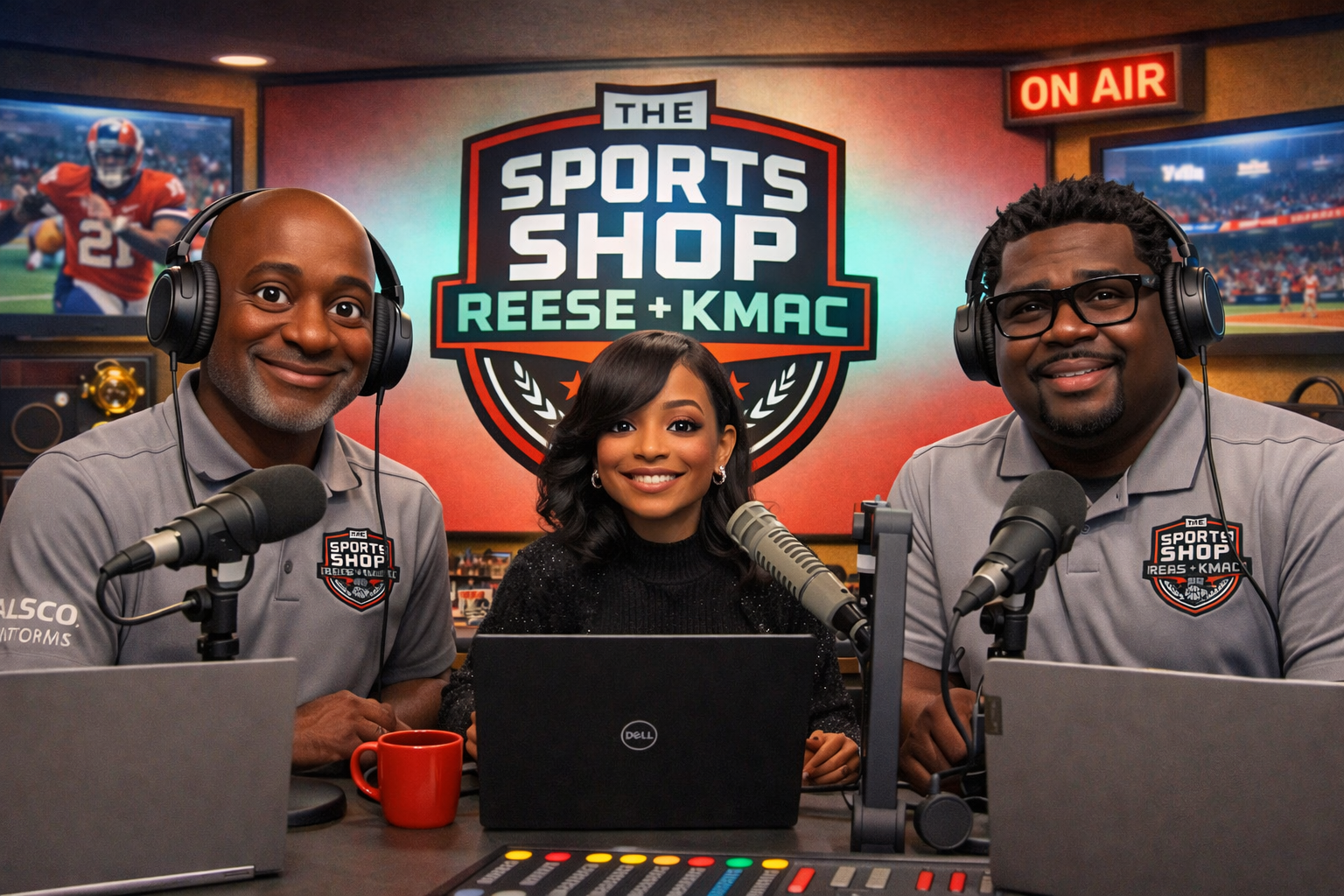
Image credit: Sports Rap Network
The Sports Shop panel sees Cleveland's choice to start Deshaun Watson as a difficult football decision burdened by a costly past, intense public backlash and a young quarterback waiting behind him.
Naming Deshaun Watson the Cleveland Browns' starter has reopened every argument surrounding the franchise: the investment, the on-field uncertainty, the allegations that reshaped his public standing and the future of Shadour Sanders. On Sports Shop, the conversation did not excuse Watson's conduct or dismiss the serious concerns attached to his name. It did challenge the idea that the decision can be evaluated honestly without acknowledging how much Cleveland has already tied to him.
The panel's central point was simple: Cleveland may be making the best of a bad situation, not celebrating a clean solution. Watson has to prove he can still play, handle the pressure and lead a locker room under relentless scrutiny. Meanwhile, Sanders has reportedly narrowed the gap in the competition, but his continued development gives the Browns a reason not to force a final quarterback answer before Week 1.
A decision shaped by far more than the depth chart
The strongest criticism of Watson's elevation has framed it as evidence that the Browns refuse to admit a catastrophic mistake. Marcus Spears argued that the turmoil surrounding Watson's time with the team has damaged the organization and that naming him starter will not repair its larger problems. That is a forceful assessment, and it reflects the exhaustion many observers feel when discussing a situation that has lingered for years.
But the Sports Shop hosts drew a distinction between condemning Watson's character and assessing Cleveland's immediate football logic. They noted that the organization gave up major draft capital and committed guaranteed money to Watson. That money is owed whether he plays or not. In that context, opening with him can be viewed as an attempt to get a clear answer quickly rather than as an endorsement of everything that has happened.
The real question is whether Watson can carry the moment
For the panel, Watson's mental readiness is as significant as his arm talent. One host said she has never been a fan of his character, while also recognizing his ability as a player. Her concern about starting him was rooted in whether he is prepared for the emotional demands of the job, especially after seeing how strongly he appeared to react to boos and criticism.
That pressure will not be abstract. The hosts pointed to the possibility that Cleveland's home environment could be especially difficult, including a home matchup with the Panthers after the first two games on the road. A quarterback can survive hostile road stadiums because the opposition is expected to be against him. Playing where the home crowd is hostile is a different kind of test. If Watson feels as if he is playing 17 road games, his physical condition may become secondary to whether he can remain present, composed and productive.
The show also pushed back on coverage that treats Watson as beyond any discussion of football. The hosts did not argue that fans must like him, forgive him or stop criticizing him. They questioned whether some commentary has become so absolute that it leaves no room to analyze the actual competition, practice performance or the possibility that a team has a short-term plan. Accountability matters, but so does precision when discussing what a franchise is trying to do.
Shadour Sanders does not need to be rushed into a verdict
Sanders is central to the debate because he represents Cleveland's most immediate alternative, but the Sports Shop conversation resisted declaring that he has already been denied a job he clearly won. The Browns coach said Watson was ahead over the offseason and training camp, while Sanders had closed the gap. Sanders himself has expressed excitement about his development while acknowledging he still has work to do.
That framing matters. The hosts recognized Sanders' talent and argued he could be a starter in the right circumstance, particularly for a team needing quarterback help. Yet they also stressed that people outside the building have not attended Browns practices or quarterback meetings. Public perception can be useful, but it cannot replace the team's direct evaluation of timing, command, decision-making and readiness.
The more practical case is that Cleveland can learn a great deal in a small number of games. If Watson cannot deliver, the team can make a change and give Sanders meaningful work for the remainder of the season. That is not ideal for Sanders, who understandably wants the opportunity to play, but it is a path that could allow him to develop without making him the sole answer to every unresolved issue left by the Watson decision.
What It Means
The Browns' choice will be judged by what happens next, not only by the controversy that preceded it. If Watson performs well, Cleveland will have bought itself time and perhaps some stability. If he struggles, the pressure to turn to Sanders will grow immediately, and the organization will again face questions about whether it waited too long to move forward.
Sports Shop's debate landed in an appropriately uneasy place. Watson's past should not be minimized, and his public standing will remain part of this story. But the Browns also have a football decision to make in real time. Their task is to assess Watson without denial, develop Sanders without using him as a symbol, and make the next move based on performance rather than panic.
Substantive update: