
Blog | Sports Rap Network
Russell Westbrook Retires With a Legacy That Cannot Be Measured by One Ranking
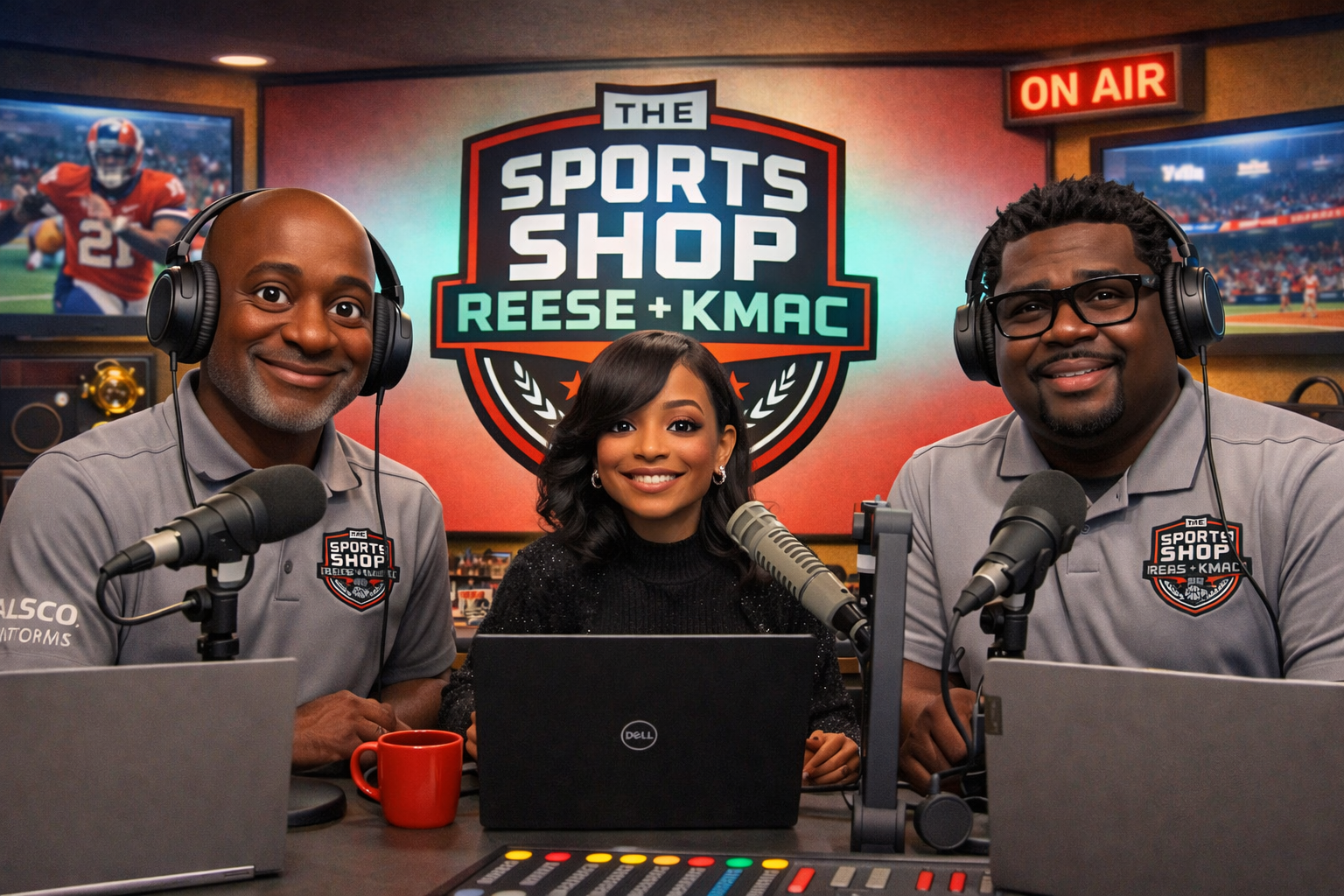
Image credit: Sports Rap Network
Sports Shop saw more than a farewell in Russell Westbrook’s retirement: it was a statement about effort, self-definition and the unfinished work of a rare NBA career.
Russell Westbrook’s retirement after 18 years in the NBA immediately invites the kind of argument basketball fans enjoy: Where does he rank? Is he a top-10 point guard? What does a career without a championship mean beside the remarkable production? Sports Shop did not dodge those questions, but the show’s strongest reaction centered on something more enduring than a number on a list.
Westbrook’s farewell, released as a social-media video narrated by Michael B. Jordan, gave the hosts a frame for the moment. Westbrook does not speak in the piece. Instead, he walks through a museum-like setting filled with images from his life and career before arriving in an unfinished, blank room. For the Sports Shop crew, that final canvas made clear that retirement is an ending to one chapter, not the end of the man’s ambition.
A Farewell That Spoke Without a Speech
The show was struck by the restraint of Westbrook’s retirement presentation. The images move from his childhood in Los Angeles and inner-city surroundings through the major moments of his professional career, while Jordan’s narration supplies the reflection. Westbrook’s choice not to address the camera with a conventional statement was not viewed as an absence. It was viewed as a confident way of letting the career carry its own weight.
The closing image mattered most. Westbrook sits in a room that is not complete, an image the hosts read as a reminder that there is more he intends to build. His shirt also delivers a message about refusing to move according to what others say. That is a fitting idea for a player whose career has long produced strong opinions. Whether fans praised or criticized him, Westbrook consistently appeared determined to live and compete on his own terms.
The Work Ethic Was Always the Headline
Sports Shop’s praise for Westbrook began with the way he played. The hosts described him as one of the most amazing athletes they had seen in basketball, a guard whose explosiveness to the rim, pace with the ball and ability to make plays beyond scoring separated him. He was not presented as a perfect player; no serious conversation about a career this large should pretend otherwise. But his effort between the lines was treated as beyond dispute.
That distinction matters. Westbrook became known as a player who brought a dependable level of energy and production every night. The crew noted the unusual tension in his résumé: he could put up enormous numbers, including triple-double production across four seasons, while still being discussed through what he was not supposed to do well, particularly as a shooter. That says less about a lack of impact than about how difficult he was to categorize. His game was forceful, unconventional and impossible to ignore.
The Point Guard Debate Has No Easy Answer
When the show considered a ranking that placed Westbrook somewhere from eighth to 10th among point guards, the pushback was not disrespect. It was an acknowledgment of the company involved. Magic Johnson, Stephen Curry, Oscar Robertson, Jerry West, John Stockton, Isiah Thomas, Chris Paul, Jason Kidd and Steve Nash make for an unforgiving historical field. Add names such as Walt Frazier, Nate Archibald and Dennis Johnson, and the exercise gets even more complicated.
Championships inevitably shape these conversations, and Westbrook does not have one. The hosts also wrestled with how modern roles blur the old point guard label, especially when scoring guards are asked to create, finish and control an offense all at once. Still, a difficult ranking is not a diminished legacy. Westbrook belongs in the discussion because his achievements demand it, not because every observer must place him in the same slot.
Oklahoma City Will Have to Reckon With What He Meant
Kendrick Perkins’ view that Westbrook should have his jersey retired in Oklahoma City and should receive a statue gave the show another point to examine. Perkins placed Westbrook ahead of Kevin Durant in the Thunder’s franchise hierarchy after Shai Gilgeous-Alexander, largely because Westbrook remained with the city longer after Durant departed. The hosts found that ordering jarring, especially given Durant’s stature, but they understood the emotional logic behind it.
Franchise legacy is never just a spreadsheet. It includes talent, longevity, loyalty, memory and what players represent when circumstances change. Westbrook’s connection to Oklahoma City is therefore larger than any one comparison. His time there placed him at the center of a team’s identity, and the conversation around his standing shows how deeply fans and former teammates still associate his competitive personality with the Thunder experience.
What It Means
Westbrook’s retirement should not be reduced to a single placement on somebody’s all-time list. The arguments will continue because the standard is demanding and because fans naturally weigh championships, shooting, role definition and franchise loyalty differently. But debate is not dismissal. A player who gives a franchise, a city and a league that much visible force deserves to have the complete body of work considered.
Sports Shop’s reaction landed on the right larger point: Westbrook showed that silence can carry a message when the work has already spoken loudly. The unfinished room in his farewell is an appropriate final image for an athlete who has never seemed interested in living inside anyone else’s script. His basketball career is complete; his larger story, by design, is not.
Substantive update: