
Blog | Sports Rap Network
The WNBA Eligibility Question Is Bigger Than a Viral Declaration
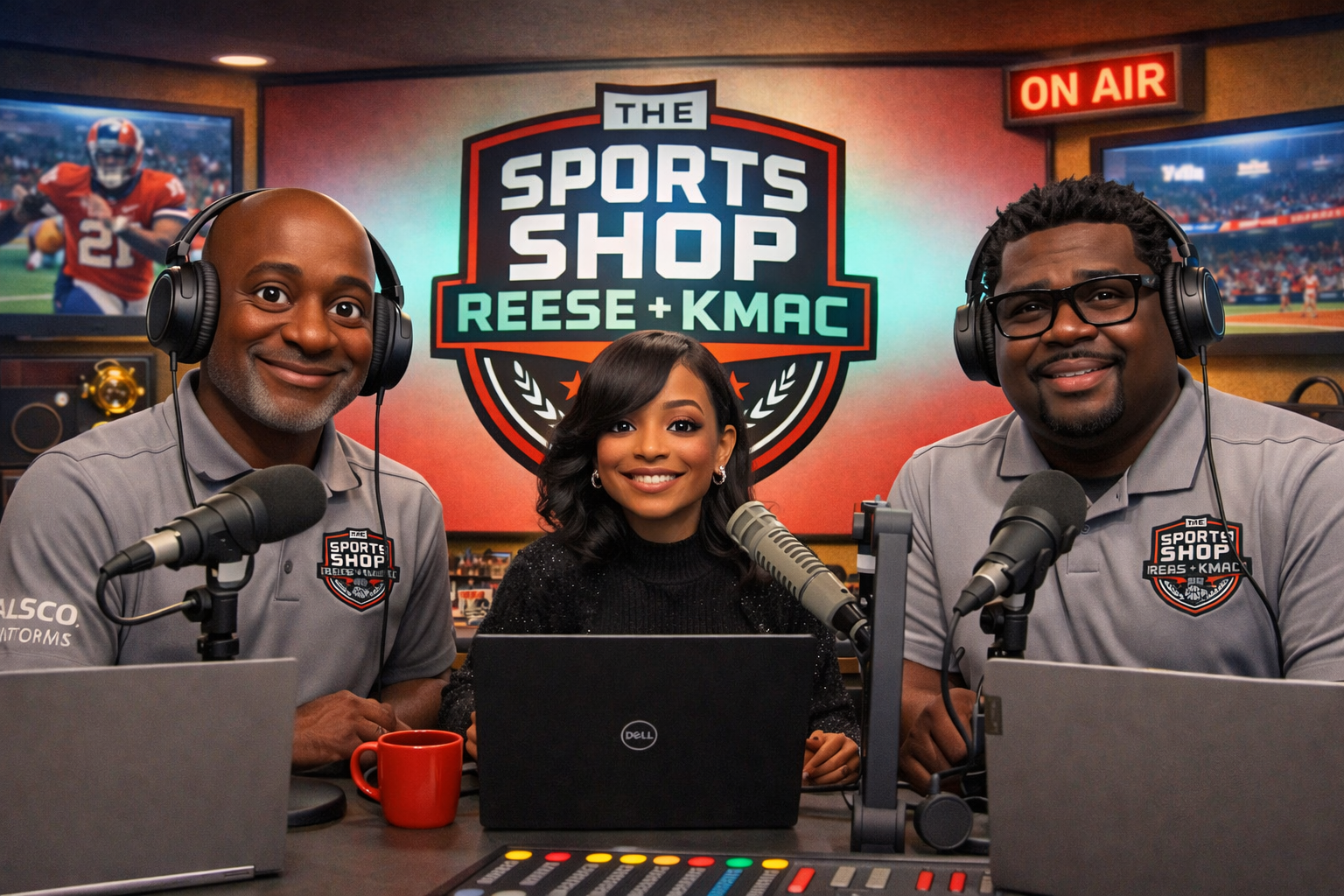
Image credit: Sports Rap Network
Two former NBA players’ declarations of WNBA eligibility have pushed a sensitive policy question into public view, and Sports Shop says the league needs a clear, professional answer.
What initially sounded like a stunt became a serious sports-business and governance conversation on Sports Shop. Two former NBA players, including Royce White and a player identified on-air as Enes Kanter, said they were declaring themselves WNBA prospects based on self-identification. Their stated purpose was to test how the league’s current eligibility framework would be applied.
The hosts did not simply laugh it off. They questioned whether the declarations were sincere, but quickly recognized the larger issue: when a professional league’s rules are challenged in public, unclear language can become the story. For the WNBA, the challenge is to respond thoughtfully while maintaining confidence in the competition it has built.
A challenge aimed at the rulebook
The declaration presented on the show framed the issue around equal application of self-identification and inclusion principles. The players argued that, if declaring one’s identity is the applicable standard, they should qualify for the WNBA draft. That framing puts the focus squarely on the league’s written criteria, not merely on the personalities making the claim.
Sports Shop noted that the WNBA’s collective bargaining agreement, as described during the broadcast, says only women are eligible while containing no specific language regarding trans players. That gap is why this moment carries more weight than a social-media provocation. A general standard can leave room for competing interpretations, especially once people seek to test it publicly.
Why fairness and safety drove the hosts’ concern
The hosts’ strongest reaction centered on physical competition. They argued that allowing former NBA players into women’s professional basketball would create an unfair matchup because of physical differences, and they raised concern that players could get hurt. Their concern was not presented as a critique of women’s basketball; it was an argument that women’s leagues deserve boundaries that protect the athletes who compete in them.
That distinction matters. The WNBA’s value is not dependent on comparison with the NBA. It is a premier league with its own players, style, audience and competitive standards. As the hosts observed elsewhere in their discussion, the league is gaining attention because people are watching real basketball and taking sides in real games. Its policies must preserve trust that the competition is being governed for its participants.
The league needs precision, not a rushed punchline
The hosts said the commissioner and league office now have a task in front of them. They referenced a response emphasizing thoughtfulness and professionalism, and that is the appropriate starting point. This subject touches identity, employment, player safety and competitive integrity. A casual answer, or a response driven only by outrage, would not meet the seriousness of those overlapping concerns.
Their discussion also recognized the legal dimension. If eligibility language can be challenged based on how it is written, then the league must ensure its standards are specific, consistent and enforceable. Dr. Foster’s point, repeated by the hosts, was simple: the language will have to change or become clearer. Clarity protects the league from confusion and gives every stakeholder a better understanding of where the line stands.
A broader question beyond the professional level
A listener raised another important concern during the show: could this question eventually reach high school and college sports? Sports Shop did not claim to know the answer, but the question showed why this discussion reaches beyond one draft declaration. Rules set or clarified at the professional level can influence public expectations and debates throughout the sports pipeline.
For families, coaches and young athletes, the issue is not abstract. Youth and college sports are places where players develop skills, confidence and opportunity. Any eligibility policy needs to account for the competitive environment those athletes enter. That is why the hosts kept returning to fairness rather than treating this solely as a culture-war talking point.
What It Means
The WNBA does not need to rush to satisfy a viral challenge, but it does need to make its standards understandable. The league’s response should be rooted in a policy that can be explained to players, teams and fans without ambiguity. That is how an institution protects both the people involved and the credibility of its competition.
Sports Shop’s central point was not that a headline-grabbing declaration should dictate the future of women’s basketball. It was that the declaration exposes a question that cannot be brushed aside. The WNBA has earned more attention because the basketball is compelling; sustaining that growth requires rules sturdy enough to meet scrutiny when attention arrives.
Substantive update: