
Blog | Sports Rap Network
Ryan Clark’s Reported ESPN Exit Leaves Sports Shop Questioning Sports Media’s Priorities
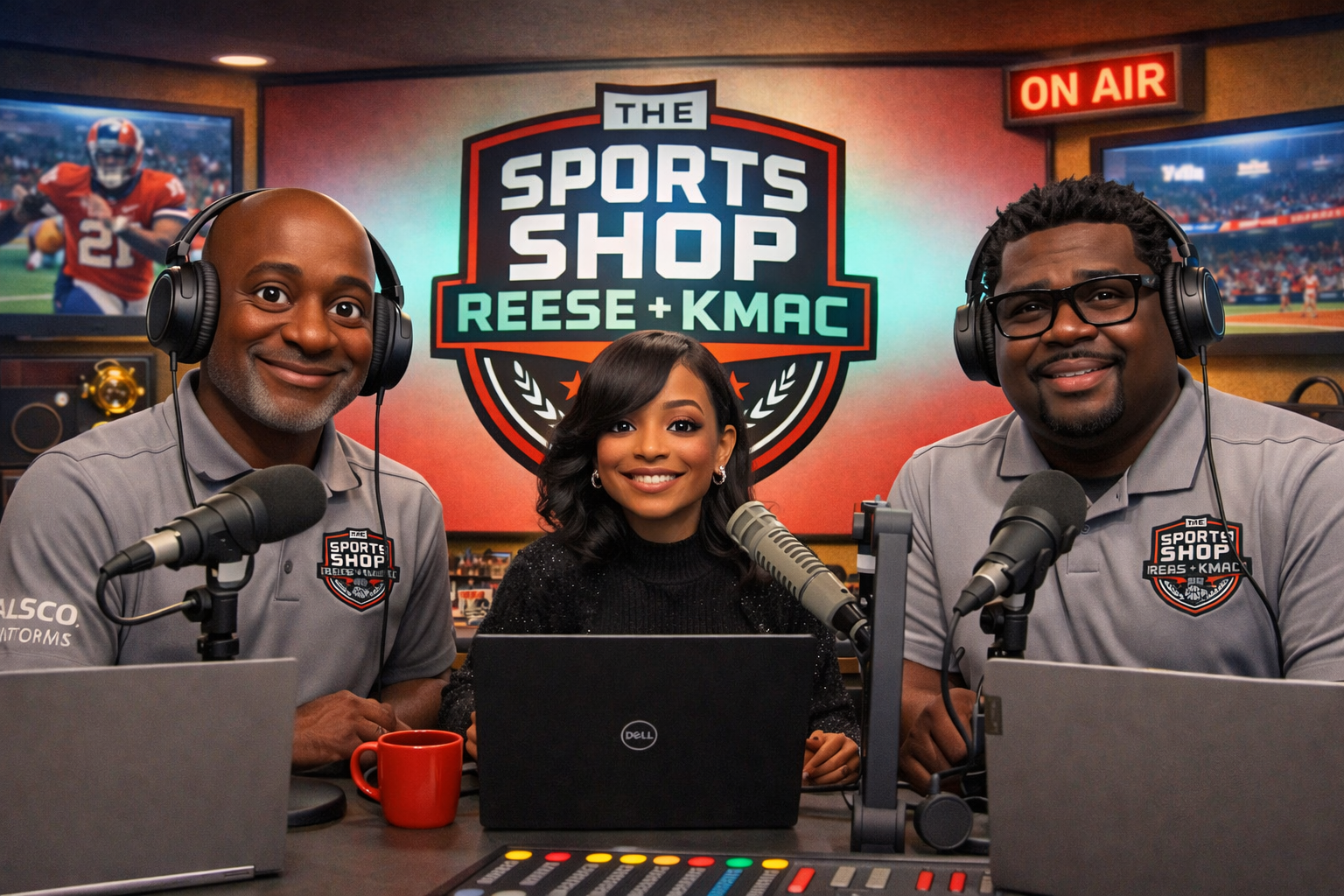
Image credit: Sports Rap Network
Sports Shop questioned ESPN’s reported decision to fire Ryan Clark, arguing that a respected football mind and trusted colleague should not be easy to replace in an era of media consolidation.
Ryan Clark’s reported firing from ESPN landed as more than another programming move for the Sports Shop. Pam Thompson Smith and Reese reacted with clear disbelief, describing Clark as a former player who knows football, communicates it with authority and brings immediate credibility whenever he appears on screen.
Their frustration was rooted in a simple question: How does a network decide which voices are expendable? The hosts recognized that business realities can follow acquisitions and reorganizations, but they argued that Clark’s value as an analyst, colleague and trusted presence makes this particular decision difficult to understand.
A Football Voice the Hosts Trusted
Reese said Clark was the kind of analyst whose appearance changed the feel of a broadcast. When he saw Clark come on, Reese said, he knew “the A-team” was on. That assessment was not merely about name recognition. It reflected the confidence that Clark could speak from experience, explain the game and add substance rather than simply fill airtime.
Pam shared a personal recollection from Super Bowl festivities in Atlanta, where she encountered Clark and came away viewing him as a genuinely good person. Reese also pointed to Clark’s fraternity connection, but the larger point was professional respect. In their telling, Clark’s football background and his ability to translate that knowledge to viewers made him a distinctive voice in a crowded television landscape.
The Business Explanation Does Not End the Debate
The hosts did acknowledge a possible business context. They discussed ESPN’s purchase of NFL Network and the likelihood that bringing two operations together created overlapping positions. In any merger or acquisition, organizations often look at duplicate roles, budgets and internal priorities. Reese said he understood that part of the equation.
But understanding the mechanics did not mean agreeing with the outcome. Pam and Reese noted that consolidation frequently produces a familiar pattern: people who were already in place can be the ones laid off once a new structure is created. They questioned whether preserving a proven football voice should have carried more weight, especially when the network’s talent spending remains a public part of the sports-media conversation.
Their criticism was not framed as a claim that companies never need to make difficult decisions. It was a challenge to the criteria behind those decisions. Sports audiences can tell the difference between a personality who generates noise and an analyst who has earned trust through preparation, experience and consistency. For the hosts, Clark belongs squarely in the second group.
Peer Respect Became the Loudest Evidence
The reaction around Clark’s reported firing also stood out to the Sports Shop. Pam referenced the support that surfaced from colleagues and the broader public, saying the volume of the response showed how much respect he carries. In an industry where careers can become transactional quickly, that kind of reaction says something meaningful about a person’s relationships and standing.
Stephen A. Smith’s public comments added to that picture. As relayed during the show, Smith said he had made his unhappiness with the decision clear and described Clark as an especially close friend and brother. His words were not offered as proof that a business decision could be reversed; they illustrated how deeply Clark is regarded by people who work alongside him.
That matters because strong sports coverage depends on more than hot takes. It depends on people who can challenge others, communicate under pressure and retain the respect of viewers and peers. Clark’s support network suggests those qualities are part of his professional identity. Reese’s expectation that Clark will land quickly rests on that reputation, not on empty optimism.
What Audiences Lose When Credibility Is Treated as Replaceable
The Sports Shop’s reaction reaches beyond ESPN or one analyst. Sports-media companies make decisions in a marketplace shaped by rights fees, changing distribution and the constant demand for attention. Yet the hosts’ concern is that a focus on reshuffling talent can overlook the long-term value of viewers’ trust.
For longtime fans, former players who can explain pressure, preparation and locker-room dynamics offer a bridge between the field and the audience. That bridge is especially important in football, where the strategy and human stakes can get lost beneath scores and headlines. Clark’s reported exit became a flashpoint because the hosts believe he has consistently helped make that bridge stronger.
The issue also speaks to legacy in sports media. Young broadcasters and former athletes watching the business are learning what gets rewarded and what gets discarded. Sports Shop’s position is that real command of the game, professionalism and the ability to connect with people should remain central to that equation.
What It Means
The Sports Shop conversation did not treat Clark’s reported departure as a reason to doubt his future. The hosts expect the opposite: a knowledgeable, connected former player with a respected reputation is positioned to land somewhere else soon. The response from peers and fans, in their view, reflects a career built on more than a television slot.
Still, the moment deserves attention because sports television shapes how fans understand the games they love. Networks can change lineups, merge operations and chase efficiencies, but audiences remember who brought preparation, perspective and honesty to the discussion. For Sports Shop, Ryan Clark remains one of those voices—and that value does not disappear because a company makes a cut.
Substantive update: