
Blog | Sports Rap Network
Ryan Clark’s ESPN Exit Puts Sports Media’s Power and Player Voices Under a Microscope
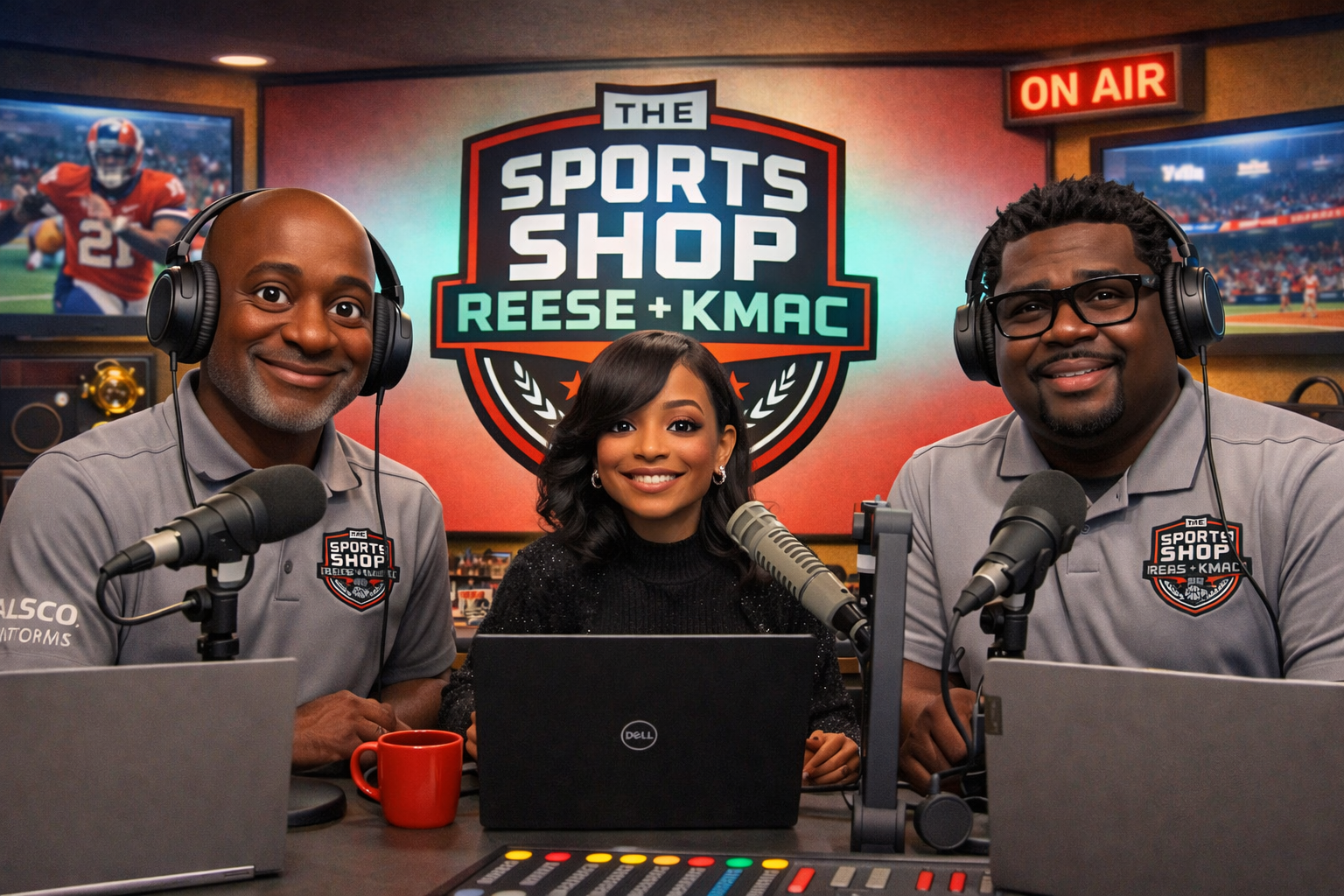
Image credit: Sports Rap Network
Sports Shop reacted with surprise and skepticism to Ryan Clark’s ESPN departure, arguing that his player perspective, independent platform and HBCU connection make him too valuable to disappear from the football conversation.
Ryan Clark’s exit from ESPN became one of the sharpest sports-media conversations on Sports Shop, not simply because a familiar football voice lost a major platform, but because of what the moment may say about who gets heard in television’s most influential debates. The hosts were openly surprised by the news, especially after Clark appeared to be working normally on air before learning that his time with the network was over.
The discussion did not treat Clark as beyond criticism. His pointed exchange with Peter Schrager, in which Clark pushed back on what he viewed as a nonplayer perspective, was acknowledged as a moment that generated criticism. Still, the Sports Shop hosts did not accept that clip as a complete explanation for a departure of this magnitude. Their reaction was that something larger may have been at work.
A surprising exit, not a simple controversy
Clark’s exchange with Schrager was central to the conversation because it exposed a familiar tension in sports television. Clark spoke from the perspective of someone who played football at the highest level and objected to having his analysis reduced to fantasy-style production numbers. His delivery was forceful, and the hosts understood why viewers could push back on the tone.
But forceful television is not unusual, particularly in football debate shows built around contrasting opinions. Sports Shop’s view was that the exchange may have created a visible flashpoint, yet it was difficult to see it as the only factor behind the decision. As one host put it, “I think it’s something else.” That skepticism was rooted in Clark’s standing as an experienced former player who has shown he can explain the game as well as argue a position.
Why player perspective still matters
The broader issue is not that only former players should talk football. Strong reporting, film study and informed analysis come from many directions. The value Clark brings is the ability to connect strategy, locker-room reality, pressure and accountability in a way that reflects lived experience. That perspective can challenge conventional television framing, and it can make a conversation more honest when it is used with discipline.
Sports Shop described Clark as someone who can talk the talk and walk the walk. That distinction matters to viewers who want more than recycled talking points. A player’s background does not excuse every on-air moment, but it does add context that should be respected rather than dismissed. Football is a business and a spectacle, but it is also a game played by people whose decisions are shaped by preparation, pain, trust and responsibility.
Independent platforms change the equation
The hosts also emphasized that Clark is not entering an empty marketplace. His work on The Pivot has already demonstrated that he can reach an audience outside a traditional studio structure. Building a direct platform gives media personalities room to shape their own discussions, bring in guests on their terms and create programming that does not depend on one network’s daily priorities.
That independence does not make a network job unimportant. Major television exposure remains powerful, and losing it is a consequential development. But independent media can provide resilience, especially for people who have earned audience trust. Sports Shop’s expectation was clear: Clark will find another opportunity and could emerge on a larger scale because his credibility travels with him. The show also noted his expected work with HBCU GameDay, a connection that could broaden his impact.
An opening for HBCU-centered football coverage
The HBCU GameDay connection stood out because it points toward a part of the sports landscape that deserves serious, sustained attention. HBCU athletes, programs and communities have compelling stories that extend beyond scores. They are tied to institutional pride, family tradition, alumni networks and the ongoing work of creating opportunity for young people who want to compete, graduate and build careers.
A recognizable voice with Clark’s football background could help elevate that coverage without treating it as a side project. The opportunity is not merely promotional. It is about bringing sharper analysis and larger visibility to players and programs that deserve to be discussed with the same seriousness afforded to every other level of the game. For Sports Shop, that possibility was one reason to view the ESPN exit as a transition rather than an ending.
What It Means
Clark’s departure is significant because it arrives at a moment when sports media is deciding what kind of football conversation it wants to reward. Former players do not automatically make better analysts, and nonplayers do not automatically lack insight. But a healthy debate needs room for people who understand the game from different seats without turning disagreement into disqualification.
Sports Shop’s confidence in Clark’s future rests on more than goodwill. It rests on the audience he has helped build and the lanes he already occupies. Whether his next move is a new network role, expanded independent programming, deeper HBCU coverage or some combination of all three, the show sees a capable media figure with options—and a story that is bigger than one employer.
Substantive update: