
Blog | Sports Rap Network
Bijan Robinson Deal Gives Falcons a Foundation, but the Quarterback Question Remains
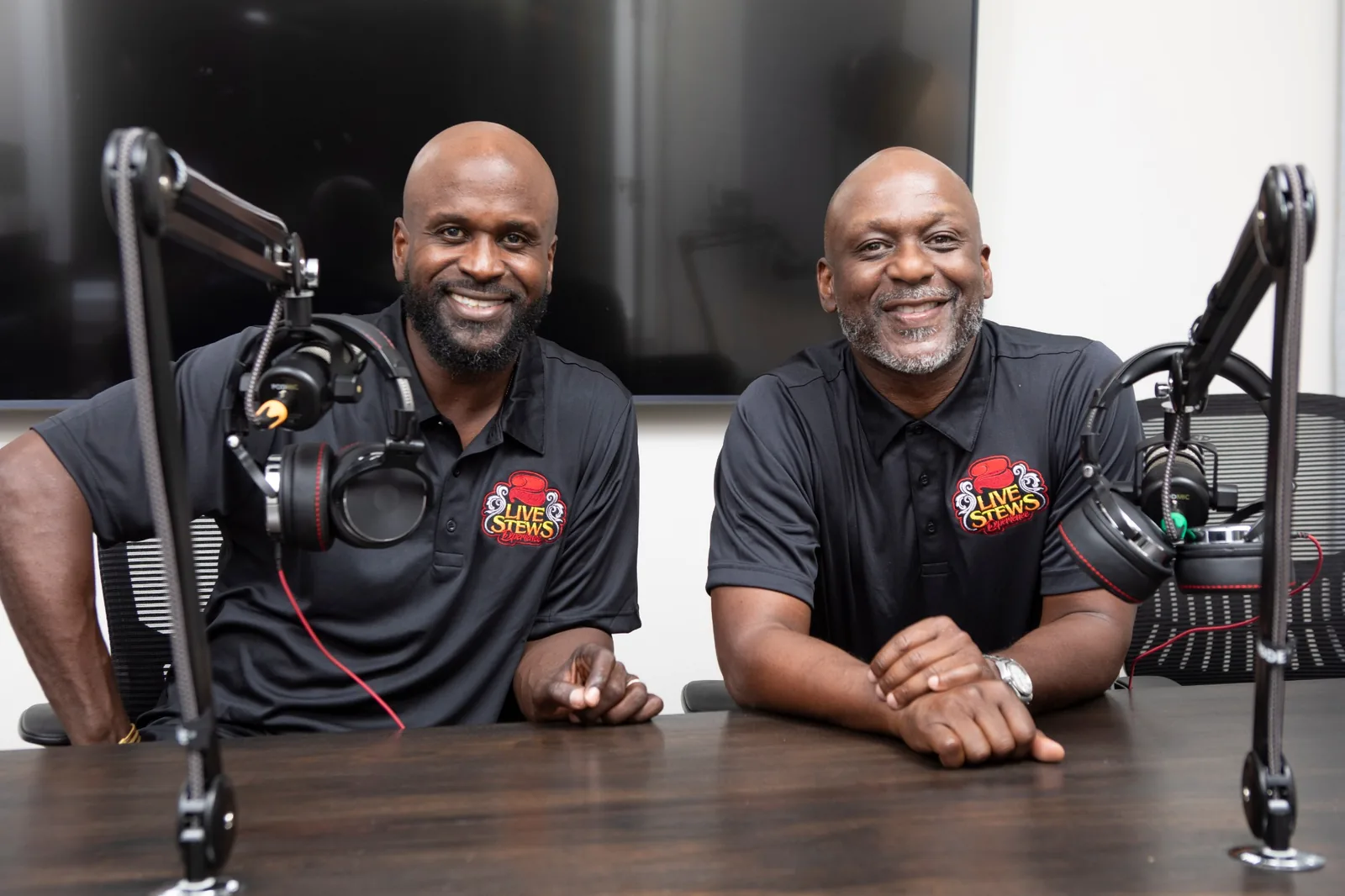
Image credit: Sports Rap Network / source-provided image
The Falcons’ reported extension for Bijan Robinson secures a rare all-purpose talent and sharpens the franchise’s biggest remaining question: can the quarterback situation catch up to the offense?
The Atlanta Falcons’ reported three-year extension for Bijan Robinson, worth up to $75 million with $51 million guaranteed, is a major commitment in an NFL climate that has often treated running backs as replaceable. On 2 Live Stews, Ryan and Doug Stewart saw it differently. Their view was straightforward: Atlanta should not move a proven centerpiece merely because the position has been devalued around the league.
For the hosts, Robinson is not simply a runner with highlight-reel moves. He is the kind of complete offensive player a franchise spends years trying to find: someone who can run through contact, make defenders miss, contribute as a receiver and handle blocking duties. The contract, in their eyes, says the Falcons recognize what they already have and are prepared to build around it.
A rare commitment to a complete back
The Stews acknowledged the usual argument for moving on from a star running back. A major trade haul can reshape a roster, adding assets for both sides of the ball. But they drew a line between theory and reality. Robinson is not a hypothetical prospect or a fading veteran; he is a known commodity who has shown he can carry a broad workload and impact an offense in several ways.
That distinction matters. The hosts compared Robinson’s place among top backs with names such as Jahmyr Gibbs, Saquon Barkley, Derrick Henry, Christian McCaffrey and Jonathan Taylor. They recognized the difficulty of separating elite players, but their larger point was that Robinson’s size, versatility and ability to function in every phase make him unusually difficult to replace. The Falcons were right, they argued, to avoid treating that kind of player as expendable.
Atlanta’s offensive core is now clearer
The contract also has meaning beyond one player. The hosts pointed to Robinson, Drake London and Kyle Pitts as an offensive nucleus Atlanta has now secured for at least the next three years. That is a meaningful shift for a franchise often defined by loose ends, unfinished plans and a feeling that one missing component has kept the roster from becoming whole.
With Robinson in the backfield, London outside and Pitts available as a mismatch option, Atlanta has the foundation for a balanced attack. The Stews praised the decision to preserve that structure rather than disrupt it. They believe the team is in a position to become genuinely dangerous if it can find continuity at the game’s most important position.
That final condition is enormous. Michael Penix Jr. remains central to the Falcons’ future, but the hosts were candid about their concerns regarding his health history and the uncertainty surrounding the quarterback room. They are rooting for him, but they also believe Atlanta cannot simply assume the position will resolve itself. The investment in Robinson makes the need for an answer even more urgent.
New leadership, familiar pressure
The Stews also connected the Robinson decision to the Falcons’ front-office structure. Matt Ryan, now identified on the show as the club’s president of football, was described as having influence over football operations, while Ian Cunningham carries the general manager title. The hosts admitted the hierarchy looks unusual from the outside, but they were encouraged by the outcomes so far.
They noted that Atlanta has committed to London, Pitts and now Robinson instead of allowing uncertainty to linger around its best offensive talent. Ryan’s legacy as a Falcons quarterback remains complicated for them, particularly because of the Super Bowl loss after a 28-3 lead. Still, they gave the current leadership credit for making a decision they consider practical and overdue: pay the player who has already proven he can be the engine of the offense.
That praise came with caution. The hosts have watched the Falcons create optimism before, only to see injuries, instability or underperformance derail the season. A strong roster on paper is not a guarantee. Their approval of the Robinson extension is not blind faith; it is recognition that Atlanta has finally made one of the decisions a serious franchise should make.
The deal raises the standard
Robinson’s extension should change the way Atlanta is evaluated. Once a team commits major guaranteed money to a player at a supposedly disposable position, it is making a statement about identity. The Falcons are saying they expect their offense to run through a dynamic, reliable player who can give them more than conventional rushing production.
The Stews see that as a welcome form of accountability. There is now less room for the franchise to hide behind potential. The roster has high-level weapons. The backfield centerpiece is secured. If the offense falls short, attention will naturally turn to quarterback development, coaching and how effectively the organization turns talent into wins. Robinson got paid, but the larger obligation now belongs to Atlanta.
What It Means
The Falcons’ reported commitment to Robinson is an organizational statement: Atlanta intends to build around a player it already knows can handle responsibility. In a league that routinely treats running backs as disposable, the club is betting that Robinson’s total skill set makes him an exception. The hosts believe that is a sensible bet, especially when the player can influence the game as a runner, receiver and blocker.
But a stable core is not the same as a finished contender. The Falcons still need dependable quarterback play, a healthy and productive supporting cast, and results that validate the confidence surrounding the roster. Robinson’s deal gives Atlanta a foundation. What comes next will determine whether it becomes the beginning of a real era or another promising plan that never fully arrives.
Substantive update: